
Marco Scarci and His Role in Managing Slipping Rib Syndrome in the UK
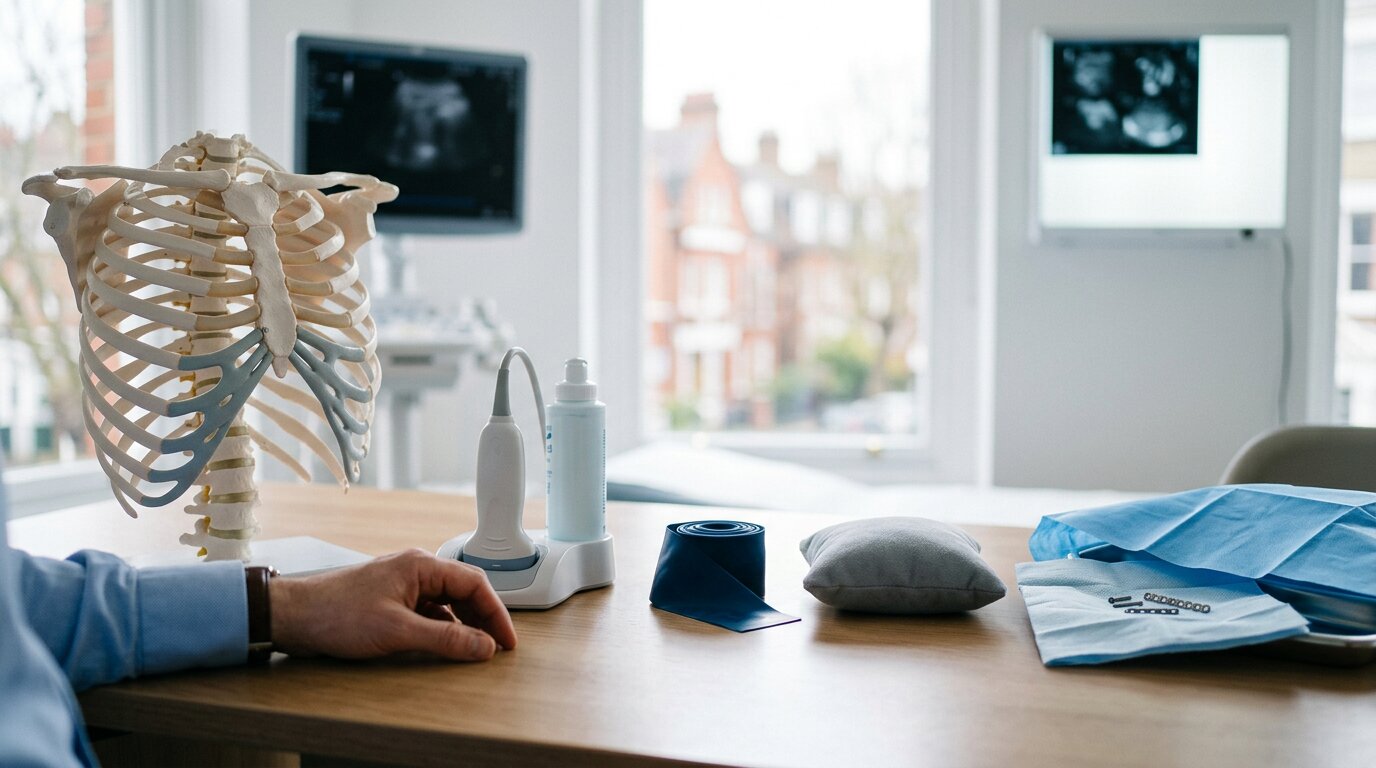
Chronic chest and upper abdominal pain is one of the most diagnostically challenging presentations in clinical medicine. In a significant number of cases, the underlying cause is neither cardiac nor gastrointestinal but a musculoskeletal condition of the chest wall known as slipping rib syndrome (SRS). Despite having been documented in medical literature for well over a century, the condition remains poorly understood across most clinical settings, leaving many patients cycling through specialists without a credible diagnosis or a clear path forward.
Within the United Kingdom, Mr Marco Scarci, a Consultant Thoracic Surgeon based in London, has emerged as one of the most recognisable clinicians working in this space. His work with slipping rib syndrome sits within a broader thoracic surgery career built over more than two decades, and his approach to the condition has drawn attention from patients and peers alike. This article reviews his background, diagnostic methodology, treatment model, and patient outcomes to offer a grounded, evidence-informed picture of the care he provides.
Who Is Mr Marco Scarci? Background and Professional Standing
A Career Shaped by International Training
Mr Scarci qualified as a doctor of medicine with honours in 2001 at the Università degli Studi 'Gabriele d'Annunzio' di Chieti in Italy, before undertaking specialist cardiothoracic surgical training across several leading institutions. His fellowship years included a clinical fellowship at Basildon and Thurrock University Hospital, a senior clinical fellowship in thoracic surgery at Guy's and St. Thomas' NHS Foundation Trust, and a six-month fellowship at the University of Toronto in Canada. This international exposure broadened his surgical repertoire considerably and grounded his practice in a comparative understanding of how thoracic surgery is approached across different healthcare systems.
He was appointed Consultant Thoracic Surgeon at Papworth Hospital NHS Foundation Trust in 2011, before progressing through positions at University College London Hospital and San Gerardo Hospital in Italy. He is currently based at Imperial College Healthcare NHS Trust, where he operates within one of the most clinically and academically active healthcare environments in the country. Over the course of his career, he has performed over 5,000 minimally invasive procedures, authored more than 170 peer-reviewed publications, and served as editor and co-author of four published books on thoracic surgery. He also holds editorial positions at the Journal of Thoracic and Cardiovascular Surgery and the Journal of Thoracic Disease, both highly regarded publications within his specialty.
Credentials and Professional Memberships
Mr Scarci holds the designations MD, FRCS(Eng), FCCP, FACS, and FEBTS, reflecting fellowship status with the Royal College of Surgeons of England, the American College of Chest Physicians, the American College of Surgeons, and the European Board of Cardiothoracic Surgery. These are not ceremonial recognitions but markers of a peer-validated professional standard that places him within the international tier of thoracic surgeons. He received an NHS Clinical Excellence Award in 2013, and he holds an honorary clinical senior lectureship at Imperial College London as well as a senior clinical tutorship at the University of Cambridge, both of which reflect the academic credibility that underpins his clinical work.
Understanding Slipping Rib Syndrome and Why It Goes Unrecognised
The Anatomy Behind the Condition
Slipping rib syndrome arises from hypermobility of the 8th, 9th, or 10th ribs, which are loosely referred to as false ribs because they attach to the costal cartilage rather than directly to the sternum. When the ligaments stabilising these ribs become weakened or lax, the affected rib can shift and impinge on the adjacent intercostal nerve, producing sharp, intermittent pain that may radiate across the lower chest, upper abdomen, or back. Patients frequently describe a clicking or popping sensation accompanying the pain, with symptoms worsening during specific movements such as reaching overhead, rotating the torso, or breathing deeply. In chronic cases, the condition places a significant burden on daily functioning and can become a persistent source of both physical and psychological distress.
Complicating the picture further is the fact that the ribs most often involved are not reliably visible on standard radiographic imaging, meaning that the absence of findings on X-ray or CT does not rule out the condition. Patients who present with chest pain are understandably investigated first for cardiac or gastrointestinal causes, and when those workups return normal results, they frequently find themselves without a clear next step. This pattern often results in a prolonged diagnostic journey where the correct cause is identified only after years of inconclusive investigations and specialist referrals.
The Long Diagnostic Journey Most Patients Face
Slipping rib syndrome receives limited attention in standard clinical training curricula, and the hands-on examination technique that most reliably confirms it is not widely taught outside of specialist thoracic circles. The result is that many general practitioners and even hospital-based clinicians have limited familiarity with the condition, making correct identification something that often depends on finding a practitioner with a specific interest in chest wall disorders rather than standard clinical pathways. Mr Scarci has spoken openly about the degree to which patients arrive at his clinic after years of being told their pain has no identifiable cause, a pattern that reflects both the diagnostic complexity of SRS and the limited specialist infrastructure available to manage it in the UK.
How Mr Scarci Diagnoses Slipping Rib Syndrome
The Hooking Maneuver and Hands-On Clinical Examination
At the centre of Mr Scarci's diagnostic approach is a thorough physical examination in which the hooking maneuver plays a defining role. This bedside technique involves curling the fingers beneath the lower costal margin and applying a gentle upward traction; a positive finding reproduces the patient's characteristic pain and may elicit a palpable or audible click, confirming rib hypermobility. While the test itself is simple in principle, its accuracy depends heavily on the examiner's familiarity with it. In Mr Scarci's hands, it functions as a highly reliable first-stage diagnostic tool, particularly when it reproduces the exact pain the patient has been describing throughout their diagnostic journey. He also takes a structured patient history that accounts for the nature and triggers of pain, prior investigation results, and the full clinical context, ensuring that the diagnosis is reached through a rigorous and considered process rather than on isolated findings alone.
Dynamic Ultrasound as a Confirmatory Tool
One of the more distinctive elements of Mr Scarci's diagnostic process is his use of dynamic ultrasound, a real-time imaging modality that allows the ribs to be observed while the patient is in motion. Unlike static imaging techniques, which capture anatomy at a single point in time, dynamic ultrasound can directly visualise a rib subluxing or shifting during specific movements, providing objective and recordable evidence of the instability that underpins the diagnosis. This is particularly valuable in cases where clinical examination findings are subtle, or where a documented finding is necessary for insurance authorisation, medico-legal purposes, or patient reassurance before committing to an interventional pathway.
The combination of a well-conducted physical examination and dynamic ultrasound addresses the two main weaknesses in SRS diagnostics: the reliance on subjective symptom reporting and the limitations of standard imaging. By pairing these tools, Mr Scarci is able to build a diagnostic picture that is both clinically rigorous and practically useful, whether the subsequent plan involves conservative management, interventional treatment, or surgery. This structured approach is part of what distinguishes his practice from more generalist settings where one or both elements may be absent.
Treatment Options Available Under Mr Scarci's Care
Conservative Management and Interventional Therapies
Mr Scarci's treatment philosophy follows a stepwise model that begins with the least invasive options and escalates only where clinical need justifies it. For patients presenting with relatively mild or early-stage slipping rib syndrome, the first line typically consists of structured physical therapy, aimed at strengthening the musculature supporting the ribcage and spine, combined with postural retraining and activity modification to reduce the mechanical loading on the affected ribs. Where pain is limiting daily life, short-term pharmacological support using anti-inflammatory medications or topical analgesics may also be recommended. This tier of management is appropriate for a meaningful proportion of patients and can achieve good symptomatic control when guided consistently.
Surgical Solutions for Severe or Persistent Cases
For patients who have not responded adequately to conservative and interventional measures, Mr Scarci offers surgical management using minimally invasive techniques wherever the clinical situation allows. The most common procedure performed is costal cartilage resection, in which the segment of the hypermobile rib contributing to nerve irritation is surgically removed. In cases where instability rather than direct nerve impingement is the primary driver, rib stabilisation using sutures, mesh, or titanium clips may be the more appropriate solution. Where there is evidence of established intercostal nerve involvement following prolonged compression, targeted nerve management may also form part of the procedure.
Minimally invasive surgery is central to Mr Scarci's operative approach wherever possible, and the outcomes data from his practice reflect this. Patients who undergo chest wall surgery under his care have an average post-operative length of stay that is approximately 25% shorter than the national average, a figure that speaks to both the technical precision of his surgical technique and the careful patient selection that ensures surgery is undertaken only when it offers a realistic prospect of meaningful benefit. Recovery is supported by a structured post-operative pathway that includes phased physiotherapy, and patients report being well-informed about what to expect at each stage.
The Patient Experience: What Care Under Mr Scarci Looks Like
A Consultant-Led Journey from First Consultation to Recovery
A feature of Mr Scarci's practice that patients consistently highlight is that their care is personally managed by him from the initial consultation through to post-operative follow-up, rather than being distributed among different members of a clinical team at each stage. This consultant-led model is less common than it might appear in modern specialist practice, where high patient volumes often necessitate delegation, and its significance is particularly pronounced for patients who have previously felt lost within fragmented care pathways. The continuity ensures that the clinician who reaches the diagnosis is also the one performing the procedure and monitoring recovery, which supports better clinical decision-making and builds a more coherent and trusting therapeutic relationship.
Practical accessibility is another noted strength. Consultations are frequently available within days rather than the weeks or months typical of specialist referral timelines, and remote consultations are accommodated for patients travelling from outside London or from other countries. His practice offers direct phone access and emergency support for post-operative patients, which provides a degree of reassurance that is especially meaningful for people managing pain-related conditions that can be unpredictable in their recovery trajectory.
Outcomes, Reviews, and Recovery Benchmarks
Mr Scarci holds over 100 five-star reviews on Top Doctors UK, a platform that collects and publishes verified patient feedback and is widely used by patients in the UK when evaluating specialists. Reviewers describe him as attentive, thorough, and clear in his explanations, and many specifically note that he was the first clinician to take their symptoms seriously after a long period of inconclusive investigations. For patients with slipping rib syndrome, this is not a minor detail; the psychological weight of years without a diagnosis is significant, and the experience of being properly heard and assessed is often cited as a meaningful part of the overall care experience.
Where Mr Scarci Practises and How to Reach Him
NHS and Private Hospital Affiliations in London
Mr Scarci's NHS base is at Imperial College Healthcare NHS Trust, where his clinical work is embedded within one of the UK's leading academic healthcare systems. In the private sector, he sees patients at several well-regarded London institutions, including the Cromwell Hospital in South Kensington, the Harley Street Clinic, and The London Clinic, all of which provide facilities appropriate for complex thoracic procedures. This range of practice locations gives patients a degree of flexibility in where they are assessed and treated, and the quality of facilities across all sites is consistent with the level of care a specialist of Mr Scarci's standing requires to operate effectively.
Insurance Recognition, Waiting Times, and International Patients
Mr Scarci is recognised by all major UK private health insurance providers, which removes a common practical barrier for insured patients who might otherwise struggle to access a specialist at this level within their policy terms. Self-funding patients are also welcomed, and his team is reported to be responsive to enquiries about costs and treatment options. Appointment availability is notably strong by specialist standards, with initial consultations often accessible within days. For international patients, primarily from the United States and mainland Europe where SRS specialist access is limited, Mr Scarci's practice has established a reputation as a credible and reachable destination for assessment and treatment.
His broader academic commitments, including his work with NICE working groups, his prior leadership of chest wall and pleural malignancies working groups within the European Society of Thoracic Surgeons, and his active roles in medical education, contribute to a clinical profile that extends well beyond his individual practice. These commitments ensure that his approach to slipping rib syndrome is informed by the wider research landscape and contributes to shaping the standards by which the condition is managed more broadly across the profession.
A Credible Answer to a Condition That Has Long Been Underserved
For patients living with the compounding difficulties of slipping rib syndrome, finding a clinician who combines diagnostic precision, a structured treatment pathway, and genuine responsiveness to their experience is rarely straightforward. Mr Marco Scarci's practice represents one of the most fully developed responses to this gap within the UK, drawing on an extensive surgical career, a well-grounded diagnostic methodology, and a consultant-led care model that has consistently produced strong outcomes and positive patient feedback. Whether the appropriate path is conservative management, interventional therapy, or surgery, the framework he has built around this condition gives patients a substantive and evidence-based option at a time when they often have very few.